10 Essential Tips to Understand Peek Material Properties
Understanding PEEK material properties is crucial for various applications. This high-performance polymer offers unique benefits, making it popular in multiple industries. Its resistance to chemicals, high temperatures, and wear is impressive.
Many engineers and designers overlook certain aspects of PEEK. For instance, not all grades of PEEK have the same properties. It's essential to recognize these variations. Additionally, the processing conditions can significantly affect the final material performance.
Using PEEK effectively requires knowledge about its behavior under stress and temperature. Some users may find its cost a drawback. However, its long-term benefits often outweigh initial expenses. Delving deeper into PEEK material properties can lead to new opportunities in design and application. Engaging with this material opens doors to innovative solutions.
Understanding the Basics of Peek Material Properties
PEEK (Polyetheretherketone) is a high-performance polymer. It boasts impressive thermal, chemical, and mechanical properties. Understanding these fundamentals is crucial for many industries.
One essential aspect is thermal stability. PEEK can withstand high temperatures, often above 250°C. This makes it suitable for applications in aerospace and automotive sectors. However, the exact temperature can vary based on the specific grade used. It's essential to evaluate the material under real-world conditions.
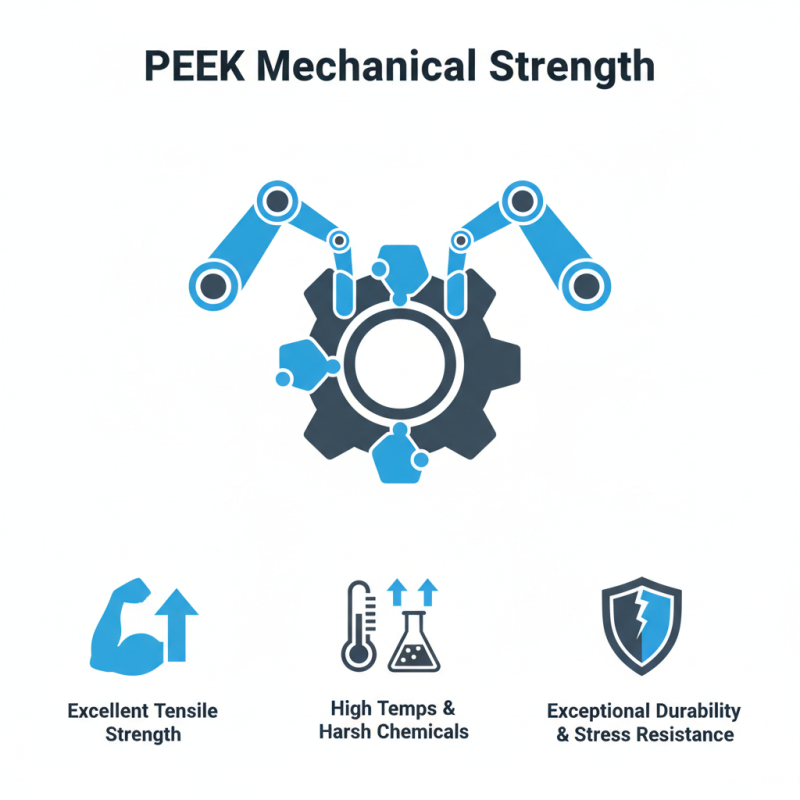
Chemical resistance is another significant property. PEEK can resist a wide range of harsh chemicals, making it ideal for medical applications. Yet, not all chemicals are compatible. Users should always test compatibility. PEEK's mechanical strength also stands out, with high tensile strength and stiffness. That being said, it can become brittle under stress in some scenarios. Each application requires careful consideration of these factors to ensure optimal performance.
Understanding Peek Material Properties
This chart illustrates key properties of PEEK (Polyether Ether Ketone) material, highlighting tensile strength, thermal stability, chemical resistance, and impact resistance.
Key Thermal Characteristics of Peek Materials
Peek materials are gaining attention for their unique thermal characteristics. They can withstand temperatures up to 260°C consistently. This high thermal stability makes them suitable for demanding applications. For example, in aerospace, thermal insulation is critical. Peek’s resistance to thermal degradation is a boon here.
Thermal conductivity of peek materials is quite low, often around 0.25 W/mK. This property helps maintain temperature stability in various environments. However, some applications may require higher thermal conductivity. In those cases, engineers often have to evaluate alternatives.
While peek offers excellent thermal properties, there are some limitations. It can be more expensive than other polymers, which may limit its use in certain industries. Additionally, its processing can be tricky. Understanding these aspects is vital for making informed decisions. Balancing cost, performance, and material properties is crucial in any engineering project involving peek.
Chemical Resistance Factors in Peek Materials
Peek materials exhibit remarkable chemical resistance, making them ideal for challenging environments. According to industry reports, PEEK can withstand exposure to a variety of harsh chemicals, including acids, bases, and organic solvents. For instance, in a study by a leading materials research institution, PEEK showed minimal degradation when exposed to sulfuric acid for extended periods.
However, it is essential to recognize that not all PEEK grades perform the same under specific chemical exposures. Some formulations may react adversely to certain substances, leading to unexpected failures. A recent analysis highlighted that while PEEK demonstrated high resistance to many solvents, its performance varied significantly in the presence of chlorine-based chemicals. This inconsistency raises important questions about the selection process for materials in specialized applications.
Moreover, environmental factors often play a crucial role in determining the long-term viability of PEEK. Temperature fluctuations, pressure, and humidity levels can all influence chemical interaction. According to a 2023 materials engineering report, engineers must conduct thorough testing to ensure that PEEK will meet performance expectations in real-world conditions. Failing to account for these variables can lead to premature material failure, which poses risks in critical applications.
Applications and Common Uses of Peek in Industry
PEEK, or polyether ether ketone, is a high-performance plastic known for its excellent thermal stability and mechanical strength. It finds extensive applications in various industries due to its unique properties. One of the most common uses of PEEK is in the aerospace sector. Components made from PEEK are lightweight yet robust, making them ideal for aircraft parts. However, the high cost remains a challenge for wider adoption.
In the medical field, PEEK is gaining traction. It is used in implants and surgical instruments because it is biocompatible and can withstand sterilization processes. Many surgeons appreciate its ability to mimic the mechanical properties of bone. Yet, some still question its longevity under extreme conditions.
The automotive industry also benefits from PEEK. It replaces metals in certain applications, reducing weight and improving fuel efficiency. But, concerns linger regarding its recyclability and long-term environmental impact.